
Table of Contents
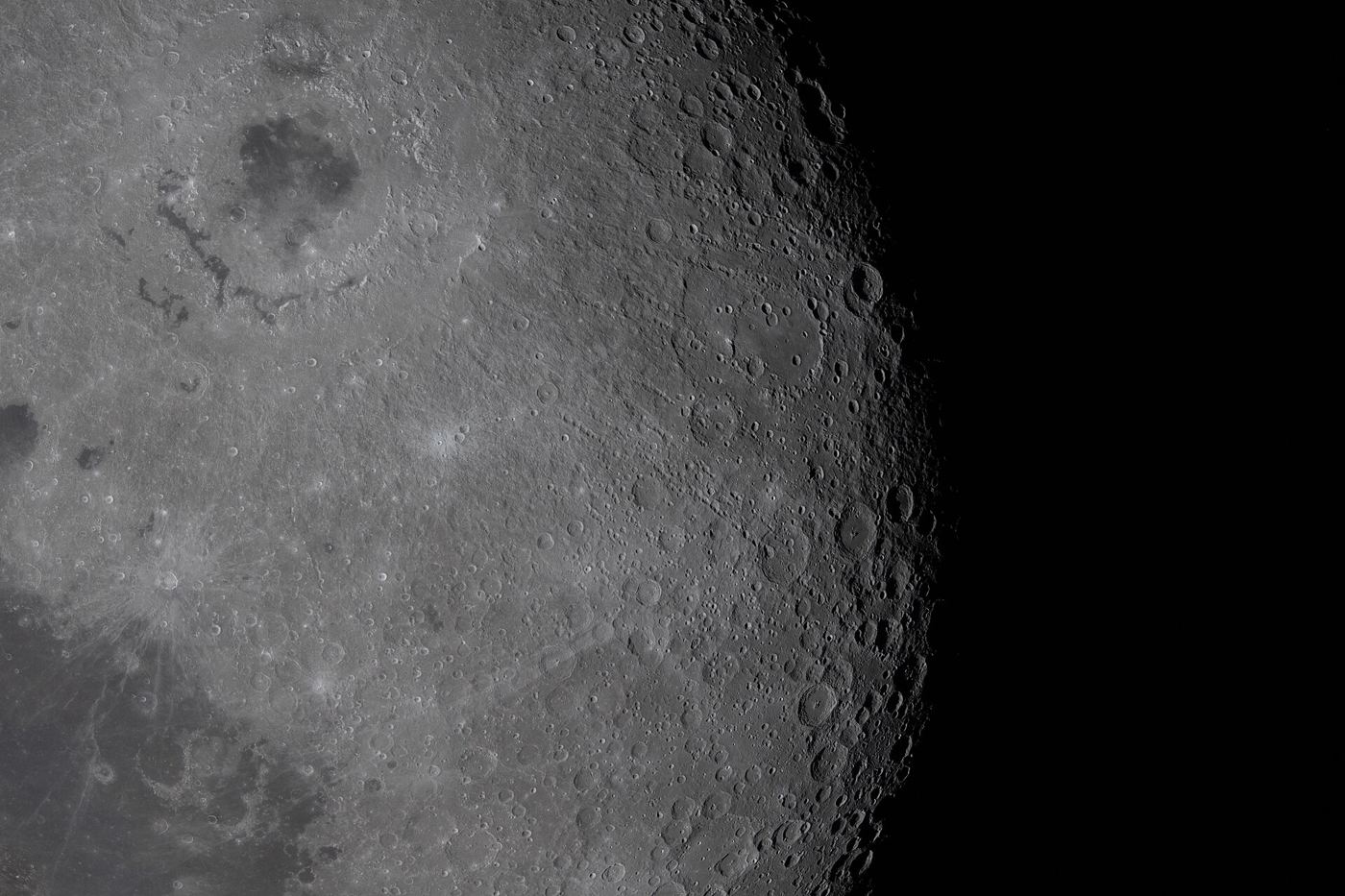
The far side of the Moon is one of the quietest radio environments in the inner solar system, shielded by solid rock from the transmissions, radar and electronic noise that flood every frequency near Earth. Cosmologists want to place a radio telescope there to listen for an extremely faint signal from hydrogen gas as it existed before the first stars switched on. That signal, stretched by the expansion of the universe into low radio frequencies, is almost impossible to isolate from the ground because human technology occupies the same bands and Earth’s ionosphere distorts what remains. A lunar array, built from simple antennas spread across a crater or unrolled by rovers, could observe during the long lunar night with no atmosphere and no interference from behind the Moon. Engineers are studying how such an instrument would survive extreme cold, abrasive dust and the challenge of returning data through a relay satellite. Even a modest first array could test deployment methods and measure the foreground noise that any future observatory must subtract. The scientific prize is a period nicknamed the cosmic dark ages, about which almost no direct observations exist, despite its central place in explaining how a nearly uniform early universe became structured.
What the Evidence Shows
Detecting the hydrogen signal would let researchers test whether the first stars and black holes formed at the times current models predict, or whether unexpected heating and cooling processes were at work. A far-side telescope could also map variations across the sky rather than recording only an average, revealing how the earliest luminous objects influenced their surroundings unevenly. The same technology has nearer benefits, including monitoring solar radio bursts from a vantage point free of terrestrial interference. None of this will be quick or cheap, and mission designers stress a staged approach: small landers first, then expandable arrays that robots and later crews can service. International discussion also matters, because preserving radio quiet on the far side requires coordination before commercial lunar activity grows. Without protection, the very advantage that makes the site valuable could be lost to unregulated transmitters. For now, laboratory prototypes and lunar precursor missions are narrowing the technical risks. If the concept succeeds, astronomy would gain an observatory unlike any on Earth, one that uses the Moon itself as a shield and opens a window on the universe’s first few hundred million years, long before galaxies like our own existed. Reporting and analysis from sources such as NASA track the same developments, and specialists following a far-side lunar radio telescope say the direction is now consistent across independent lines of evidence.
The Wider Context
Funding bodies are watching a far-side lunar radio telescope closely because the work sits at the junction of basic curiosity and practical return. Grant panels increasingly ask for a path from discovery to application, while researchers push back that the most valuable uses of fundamental science are rarely the ones written into the original proposal. The tension is productive when both sides stay honest about timescales.
What Happens Next
The long view on a far-side lunar radio telescope is that fields advance by accumulation rather than by single announcements. This result adds a solid, checkable piece to a structure many teams are building, and its authors have shared their data so the piece can be tested from every side. That is how the picture eventually becomes reliable enough to act on. You can follow related developments in our coverage of science.

